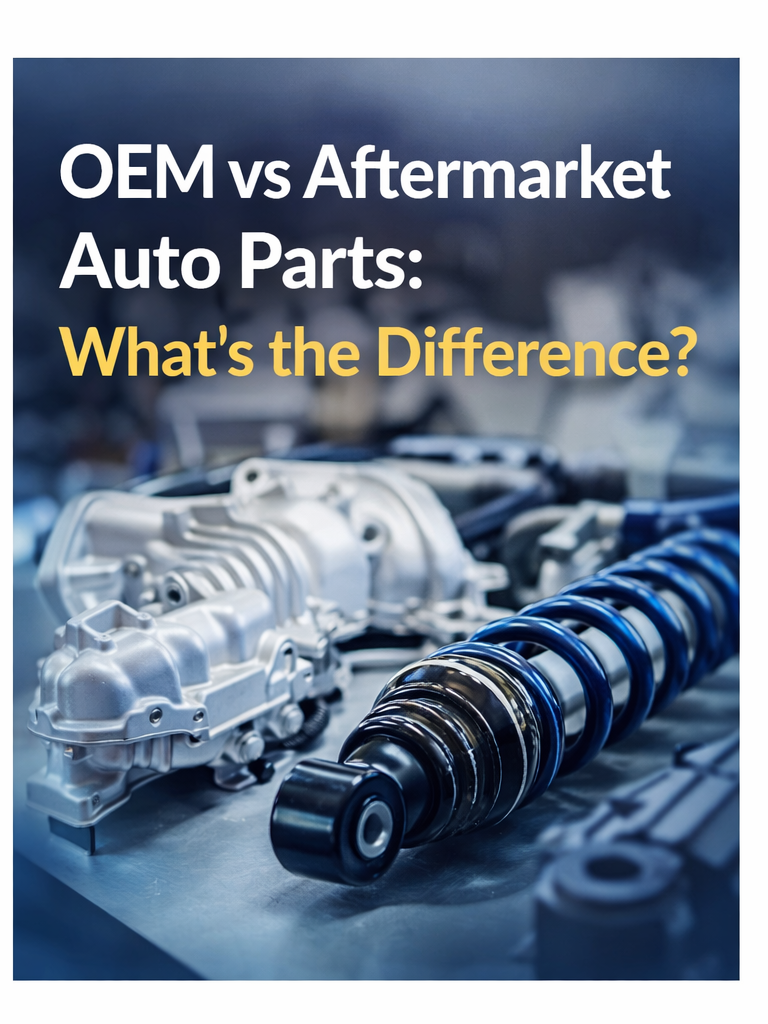
When sourcing automotive components, many buyers often face a common question: should you choose OEM parts or aftermarket parts? Understanding the difference between these two options can help you make better purchasing decisions.
What Are OEM Auto Parts?
OEM (Original Equipment Manufacturer) parts are produced according to the original specifications of the vehicle manufacturer. These parts are designed to match the original components in terms of size, material, and performance.
OEM parts are often preferred for their reliability and compatibility, especially for high-end vehicles or precision components.
What Are Aftermarket Parts?
Aftermarket parts are produced by third-party manufacturers and may vary in design, materials, and performance. These parts are usually more cost-effective and offer a wider range of options.
High-quality aftermarket parts can deliver comparable performance to OEM parts while providing better pricing flexibility.
Key Differences
1. Price
OEM parts are generally more expensive, while aftermarket parts offer more competitive pricing.
2. Variety
Aftermarket parts provide more choices in terms of materials, designs, and features.
3. Availability
Aftermarket parts are often more readily available, especially for older vehicle models.
4. Customization
Aftermarket solutions allow greater customization based on customer needs and market trends.
Which One Should You Choose?
The right choice depends on your business model and customer requirements. If your priority is strict compatibility and brand assurance, OEM parts are ideal. If you are looking for cost-effective solutions and flexibility, aftermarket parts can be a better option.
Our Recommendation
At Foshan Xinliangrui Auto Parts Co., Ltd., we provide both OEM-standard manufacturing and customized aftermarket solutions. Our goal is to help clients find the right balance between quality, cost, and performance.
Conclusion
Understanding the differences between OEM and aftermarket auto parts can help you make smarter purchasing decisions. By choosing a reliable supplier, you can ensure consistent quality and long-term business success.